


Uganda Field Notes With Dāv Kaufman: A Journey into the Heart of Africa's Wildlife and Reptiles
In January 2026, I embarked on one of my most incredible adventures yet, an ecotour of Uganda. Every moment I spent there felt even more magical than the last. Known as the “Pearl of Africa,” the country is a vibrant tapestry of diverse ecosystems, from the lush rainforests of the west to the shimmering waters of Lake Victoria, Africa’s largest lake and the source of the Nile River. My journey was a true celebration of nature, filled with remarkable encounters with some of the most endangered animals on the planet.
Face to Face with Giants: Gorillas and Chimps of Uganda
My first stop was Bwindi Impenetrable National Park, a UNESCO World Heritage Site and home to nearly half of the world’s remaining mountain gorillas. These gentle giants, Gorilla beringei beringei, are incredibly unique. They live in social groups called troops, led by a dominant silverback. Unlike other gorillas, they have thicker, longer fur that is perfectly adapted to the cold, misty mountain climate. They are primarily terrestrial, spending most of their time on the ground while feeding on leaves, stems, and bamboo.
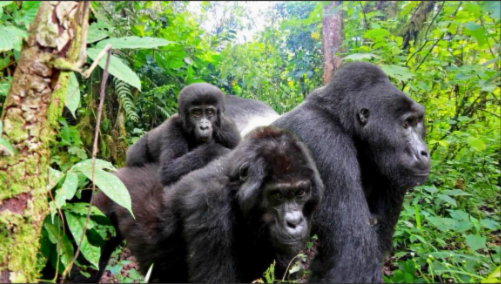
After four hours of hiking nearly seven and a half miles up the mountain, we finally found the gorilla family, and it was there that I had the most unforgettable experience of my life. As we sat within mere feet of them, a baby gorilla, full of curiosity, approached me. I stayed perfectly still as it began tugging at the laces of my hiking boots, trying to untie them. Its mother, watchful but calm, soon gently ushered it back to the group. The innocence of that moment was a powerful reminder of how fragile this endangered species truly is. While conservation efforts have made real progress, habitat loss and poaching remain serious threats.
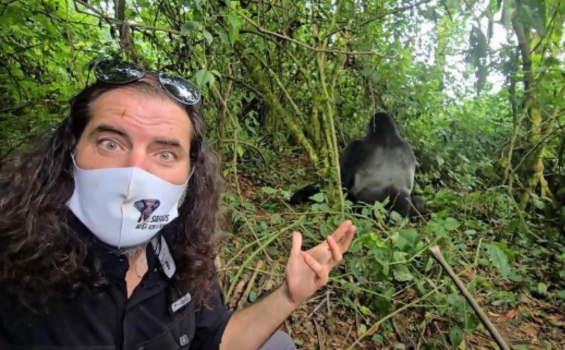
Next, I traveled to Kibale National Park, a primate paradise known for having the highest concentration of primates in East Africa. My goal was to find a remote chimpanzee family, Pan troglodytes. Our trek led us on a challenging hike deep into a gorge, and as sunlight filtered through the dense canopy, we began to hear their calls echoing in the distance.
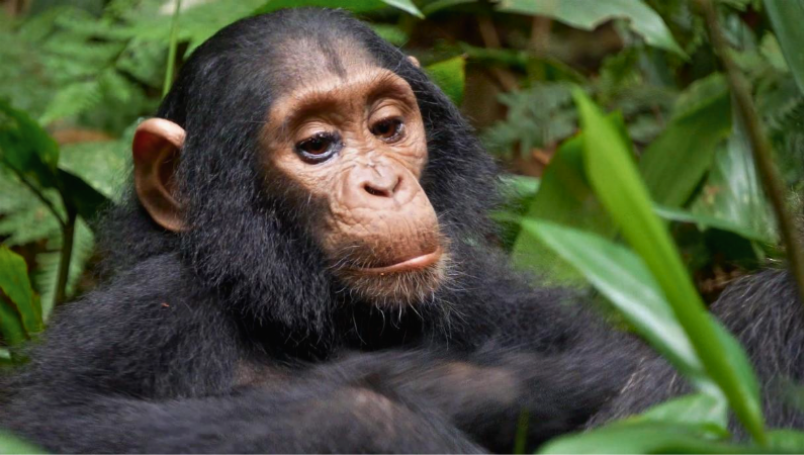
Chimpanzees are among our closest living relatives, sharing about 98 percent of our DNA, so I had to wear a mask whenever I was near them. Their intelligence is remarkable. They use tools to gather food, maintain complex social structures, and can even learn basic sign language. This remote group, far from the main tourist routes, offered a rare glimpse into their lives with minimal human influence. Watching them interact was fascinating, especially their vocalizations, which play a crucial role in communication.
Venom, Camouflage, and Coexistence: Uganda’s Reptile Encounters
From there, I traveled to a place that sounded almost mythical, Snake Island in Lake Victoria. As our boat approached, I was not sure what to expect. The island, home to a community of fishermen, is famous for its unusual harmony with one of Africa’s most venomous snakes, the giant forest cobra, Naja melanoleuca.
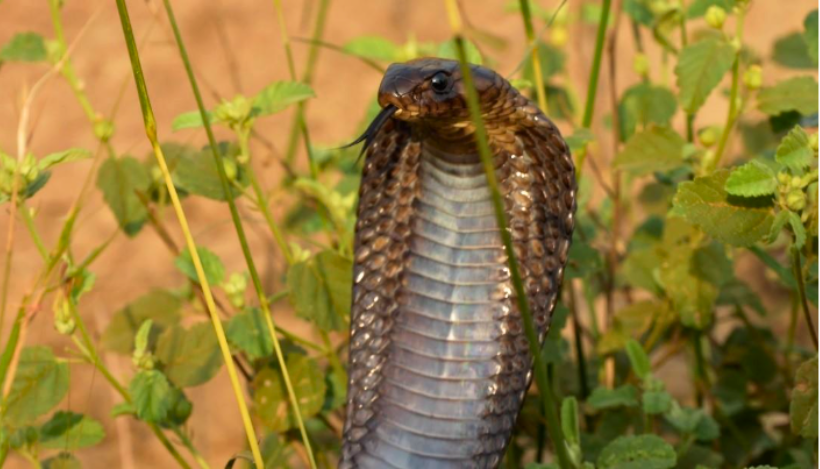
It is almost unbelievable that humans and these formidable snakes live side by side. The fishermen explained that they respect the snakes deeply and even view them as protectors of the island. The forest cobra, the largest true cobra in the world, can grow up to ten feet in length. Despite its size and potent venom, the residents have learned to coexist peacefully. I was lucky enough to spot one gliding through the water, its dark body blending seamlessly into the shadows. It was a striking example of how humans and wildlife can exist in balance, even with a species as feared as the cobra.
My final stop was a protected forest, a true haven for herpers, purchased by local guides to preserve it and share it with ecotourists. This area is home to an incredible diversity of snakes, and my goal was to find the eastern gaboon viper, Bitis gabonica gabonica. With its intricate geometric pattern, it is a master of camouflage. What truly sets it apart are its fangs, which can grow up to two inches long, the longest of any snake, paired with incredibly potent venom.
After some searching, our guide finally spotted one coiled among the leaf litter, nearly invisible against the forest floor. The gaboon viper is an ambush predator that lies perfectly still while waiting for prey. As our group of about thirteen people gathered at a safe distance, it did not move a muscle for nearly forty minutes while we photographed it, and I also filmed it for an upcoming episode of Dāv Kaufman’s Reptile Adventures on YouTube. Seeing such a powerful predator in its natural habitat was a true highlight of the trip.
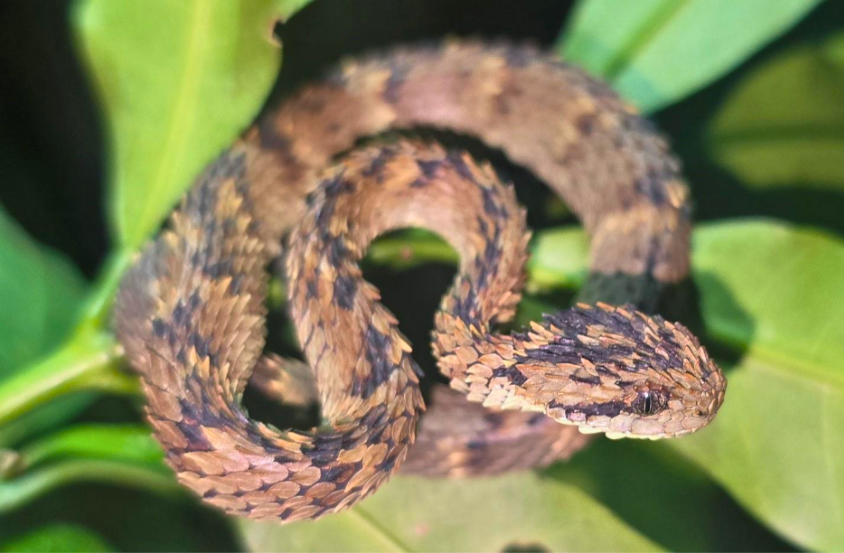
We also encountered a stunning hairy bush viper, Atheris hispida, with its uniquely keeled scales, as well as a harmless brown house snake, Boaedon capensis, a species commonly found across much of Africa. I have always said house snakes are going to be the next big thing in reptile keeping, and seeing them in the wild made that belief even stronger.
Reflections from the Wild: Why Uganda Stays With You
This journey through Uganda was a profound experience. The country’s commitment to conservation, combined with its incredibly diverse wildlife, makes it a must-visit destination for any nature, animal and of course, any reptile lover. The moments I shared with the mountain gorillas, the chimpanzees, and the incredible reptiles will stay with me forever. These animals are a vital part of our planet’s biodiversity, and we have a responsibility to protect them. Uganda, with its raw and authentic beauty, is a place where you can truly connect with nature, one encounter at a time, and one day, I will definitely be back as we only missed one target species for the trip, the Rhinoceros viper which has eluded me for the second time I’ve been in its range…but it won’t elude me a third time, I hope.
Happy Herping!
Dāv Kaufman
